

The Török Bank House: The Art Nouveau Building on Szervita tér That Houses Our Showroom
Who built it, what Miksa Róth's mosaic shows, and what else is worth seeing on Szervita tér? One of Budapest's finest Art Nouveau buildings, and home to our showroom.

In this article
Turn off Petőfi Sándor utca onto Szervita tér and look up. You'll see a narrow building that is almost entirely glass, crowned by a huge, golden mosaic. This is the former Török Bank House, one of the most beautiful Art Nouveau buildings in Budapest. Our showroom is on its fifth floor. Here's who built it, what the mosaic shows, what else there is to see on the square, and why we feel so at home here.
In short
- The building: built in 1905–1906 to designs by Henrik Böhm and Ármin Hegedűs, for the Török A. és Társa bank.
- The mosaic: made by Miksa Róth's workshop, with Patrona Hungariae at its centre, surrounded by great figures of Hungarian history.
- The square: a Baroque church, Béla Lajta's Rózsavölgyi House and Budapest City Hall, all a few steps apart.
- Our showroom: Szervita tér 3, 5th floor, doorbell 20. Open Tuesdays and Thursdays, 14:00–19:00.
A bank built on luck
Many people misread the name at first, but it has nothing to do with Turkey: Török is a family name here. The bank's full name was Török A. és Társa Bankház, that is, A. Török & Co. The bank became famous for its class lottery, an early forerunner of today's national lottery, and its slogan, "Török's luck lasts forever" (it rhymes in Hungarian), soon became a household phrase.
The lottery tickets paid for an impressive headquarters. In 1905 the bank held a design competition, and the brief didn't ask for little: the building had to dominate the houses around it, without towers or balconies, with plenty of light and air and large glass surfaces in an iron frame. Illuminated advertising was even allowed on the street front.
Henrik Böhm and Ármin Hegedűs submitted their design under the motto "Jackpot", which could hardly have been more fitting. They didn't win first prize. Still, they got the commission, and the final design combined the best ideas from several entries. Construction moved fast: the occupancy permit was issued in the summer of 1906. The bank was on the ground floor, with offices and shops above, and a studio and the caretaker's flat in the attic.
The 1908 photo at the top of this article shows just how much it stood out. The neighbouring buildings still have heavy, closed façades, while the bank is almost all glass, like the most modern department stores of the time. More than a hundred years later, that's still the first thing you notice.
A mosaic worth a closer look
The crown of the façade is Miksa Róth's huge glass mosaic, The Glorification of Hungaria. By then Róth was one of the most acclaimed glass artists and mosaic makers of his time. He designed the mosaic together with Zsigmond Vajda, and his workshop completed it in 1906.
At its centre sits Patrona Hungariae, the Virgin Mary, enthroned, wearing the Holy Crown of Hungary and holding the sword of Saint Stephen. Angels on either side hold coats of arms. Around them stand figures from Hungarian history, among them István Bocskai, Miklós Zrínyi, Francis II Rákóczi, Péter Pázmány, István Széchenyi and Lajos Kossuth, along with a hussar and a mother holding her child. Small putti play with the hem of Mary's cloak, and the radiant gold of the background comes from gold-leaf mosaic and Murano glass.
The first designs looked different. In one version an archangel stood in the middle while little helpers scattered money among the people, which would hardly have been surprising for a bank that grew rich on a lottery. The final picture is more solemn: it is said to have stood for the bank's strength and reliability, and the Servite church next door may have played a part in placing Mary at the centre.
If you look below the mosaic, you'll find two large heads of Mercury by the sculptor Simon Ney. The god of trade isn't on a bank's façade by accident. Look closely, though, and you'll see the heads have snakes for hair, so many people see something else in them too: the two immortal sisters of Medusa the Gorgon, guarding the house. The two readings sit happily side by side, and we think both are true. One detail survives only in old photos: a sculpture group holding a globe once stood on the roof. The globe was covered in opalescent glass mosaic and lit up at night, with the word "Török" shining across it. It was destroyed in the Second World War.

The building has been a listed monument since 1976. It was thoroughly renovated in the late 2000s: the original iron and steel glass wall was replaced by a modern structure that looks very much like the old one, so the façade still shines the way its architects imagined.
A small square with a lot of history
Szervita tér is small, but you rarely see so many eras so close together. It used to be called Martinelli tér, after the master builder Anton Erhard Martinelli, who designed the huge Baroque building on the corner, the former home for disabled soldiers known as the Invalids' House. Since the late 19th century it has housed City Hall. The square's current name comes from the Servite order, who settled here and built the Baroque church. The church and the Marian column in front of it are still there.

Across from the bank stands the square's other treasure, the Rózsavölgyi House. Designed by Béla Lajta and built in 1911–1912, its flat surfaces, Zsolnay pyrogranite details and folk motifs put it well ahead of its time. Look at the two façades side by side and you can almost see Art Nouveau turning into modern architecture.
While you're here, walk down Petőfi Sándor utca towards Ferenciek tere. A few minutes later you reach the Párisi Udvar: Henrik Schmahl's building, completed between 1909 and 1913, is a hotel today, but you can still walk through its passage under the glass domes.
What does this have to do with our bags?
Honestly? We didn't start making patterned bags because of this building. But it's no accident that we feel so at home here. The Art Nouveau makers believed that an everyday object, a door handle, a tile or a façade, could be beautiful and still had to work well. William Morris thought the same, and his patterns are on two of our bags. We wrote more about him, and about how English Arts and Crafts shaped Hungarian Art Nouveau, in this article.
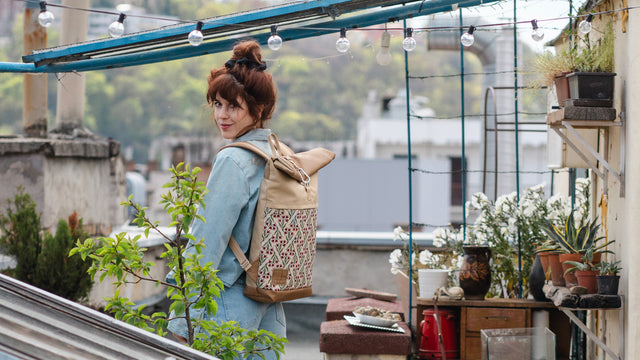
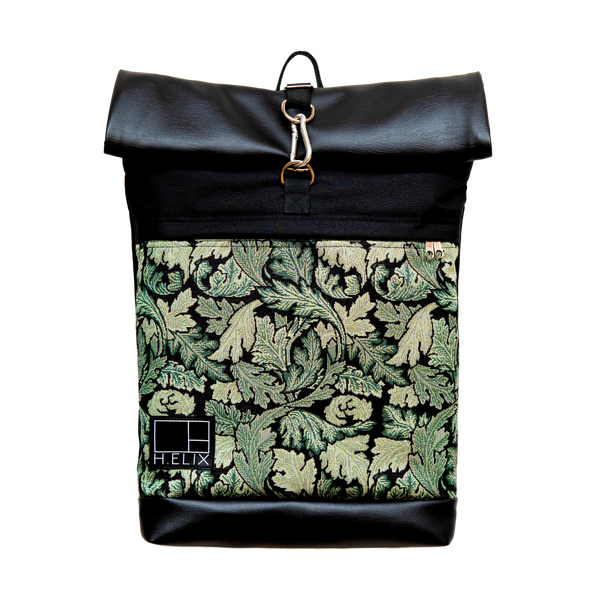
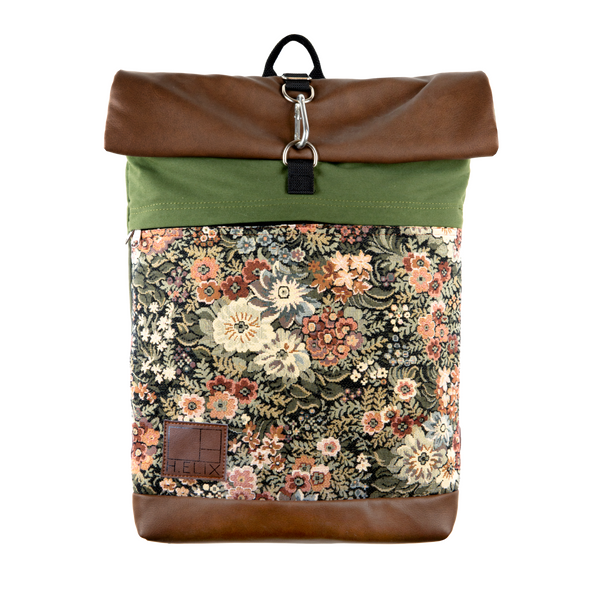
Our Vintage collection leans towards a classic, old-world style. It's made from upholstery and decorative fabrics, often leftover stock that was never used, in limited numbers. The Nr.95 carries the Strawberry Thief pattern and the Nr.97 the Acanthus, and the collection also includes pieces made from the familiar upholstery of Budapest's HÉV trains. These bags aren't museum pieces. They're made to be carried every day, in the rain, on the tram, on the way to work. They handle everyday rain well, but we can't guarantee full waterproofing.
Come up and see us
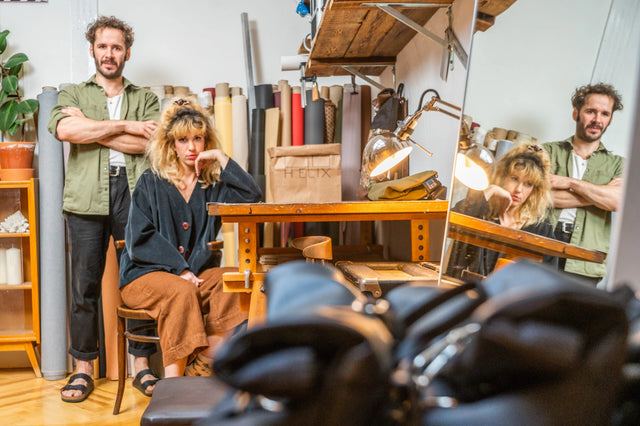
In our showroom you can try on every size, hold the patterned pieces in your hands, and if you tell us what you need a bag for, we'll help you choose.
- Address: Szervita tér 3, 1052 Budapest, 5th floor. Doorbell: 20.
- Opening hours: Tuesdays and Thursdays, 14:00–19:00.
- Holiday opening hours: 15–18 and 21–22 December, 14:00–17:00. Closed from 23 December to 4 January.
- Holiday break: we're closed and reopen on 5 January.
- Good to know: there's no lift, so it's five floors on foot. All the bags are waiting at the top.
- Getting here: just a few minutes' walk from the Ferenciek tere and Deák Ferenc tér metro stations.
Before you ring the bell, stop for a minute on the other side of the square and look up. It's best to see the mosaic before dark, while the daylight is on it.
Frequently asked questions
Why is it called the Török Bank House?
Török is a family name here, not a nationality: the bank's company name was Török A. és Társa Bankház, that is, A. Török & Co.
Who designed the Török Bank House, and when was it built?
Henrik Böhm and Ármin Hegedűs designed it after a competition in 1905, and it was completed in 1906. The mosaic on the façade was made by Miksa Róth's workshop, to a design by Róth and Zsigmond Vajda.
Can I go inside to see it?
Today it's a residential and office building, so it isn't open for visits. The façade and the mosaic are best seen from the square. Anyone is welcome to come up to our showroom during opening hours: Tuesdays and Thursdays, 14:00–19:00, ring doorbell 20.
What else is there to see on Szervita tér?
The Servite church and the Marian column, Béla Lajta's Rózsavölgyi House across the square, and City Hall, the former Invalids' House. The Párisi Udvar is a few minutes' walk away.
Will I find every bag in the showroom?
This is where we have our widest selection. If you'd like to see a particular bag, write to us first and we'll check whether we have it there.
A building that still surprises
The Török Bank House is more than a hundred years old, yet it's still one of the boldest buildings in the city centre. For us it's the best reminder that something well thought out and carefully made doesn't go out of style. If you're in the centre, look up at the mosaic, and if it's a Tuesday or Thursday afternoon, come up and see us. Until then, take a look at our Vintage bags.
Cover photo: Szervita tér in 1908, with the Török Bank House in the middle, the globe sculpture still on its roof, and the Marian column in front. Photo: Fortepan / Deutsche Fotothek / Brück und Sohn (CC BY-SA 3.0)
Our backpacks
Find your rolltop
View all →-
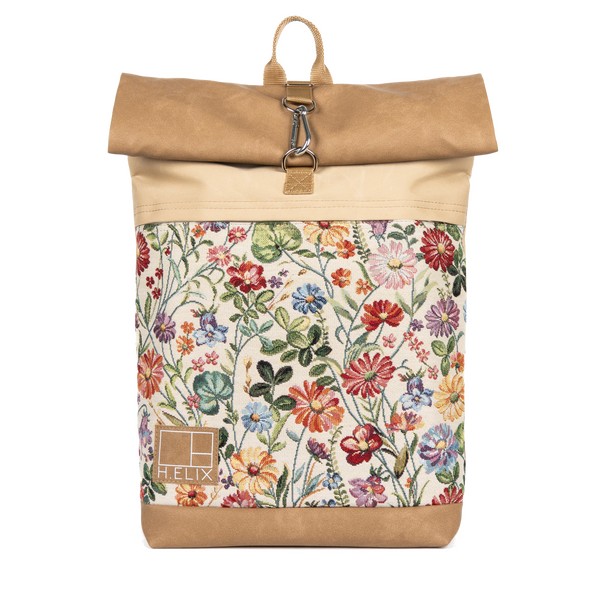 Sale
H.ELIX Nr.94
36.900 Ftfrom 29.500 Ft -
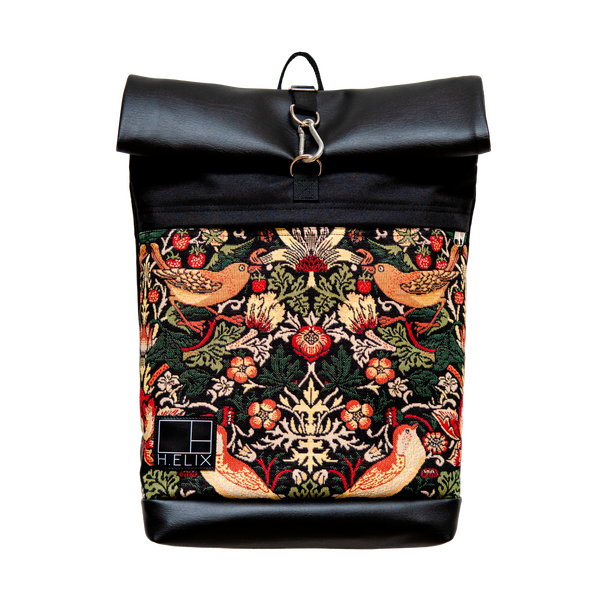 Sale
H.ELIX Nr.95
36.900 Ftfrom 29.500 Ft -
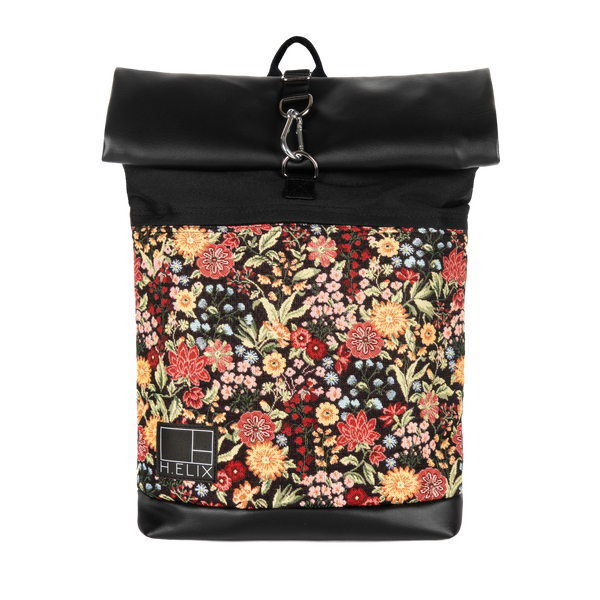 Sale
H.ELIX Nr.90
36.900 Ftfrom 29.500 Ft -
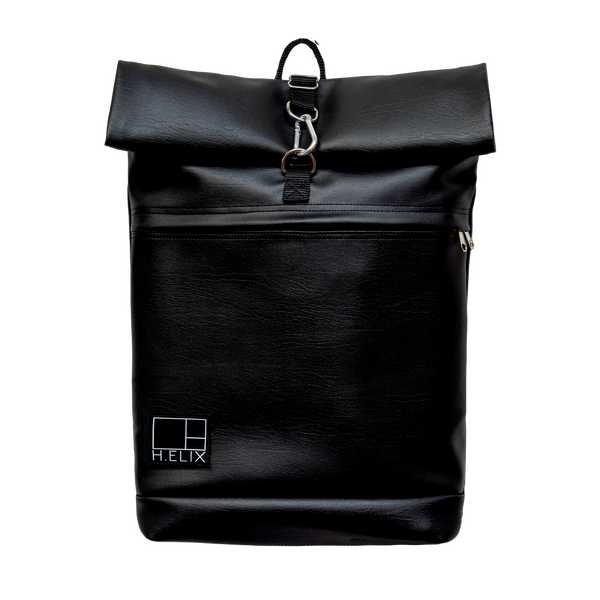 Sale
H.ELIX Black
36.900 Ftfrom 29.500 Ft -
 Sale
H.ELIX Nr.97
36.900 Ftfrom 29.500 Ft -
 Sale
H.ELIX Nr.84
41.900 Ftfrom 33.600 Ft -
 Sale
H.ELIX Nr.16
36.900 Ftfrom 29.500 Ft -
 Sale
H.ELIX Nr.92
36.900 Ftfrom 29.500 Ft -
 Sale
H.ELIX Nr.58
36.900 Ftfrom 29.500 Ft -
 Sale
H.ELIX Nr.75
36.900 Ftfrom 29.500 Ft -
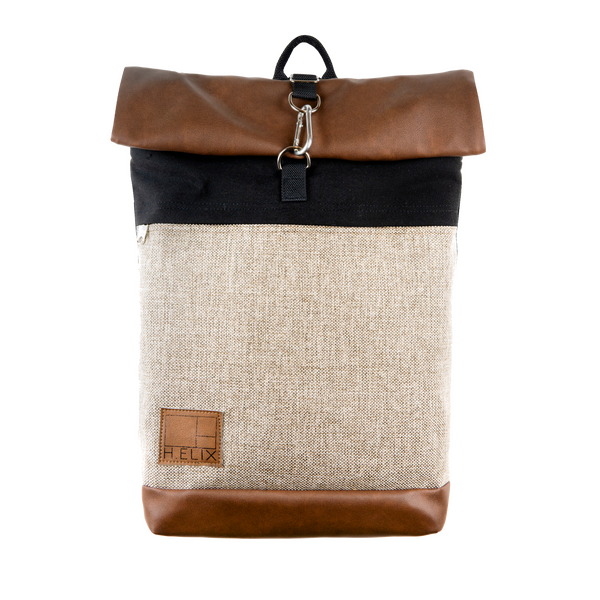 Sale
H.ELIX Nr.83
36.900 Ftfrom 29.500 Ft -
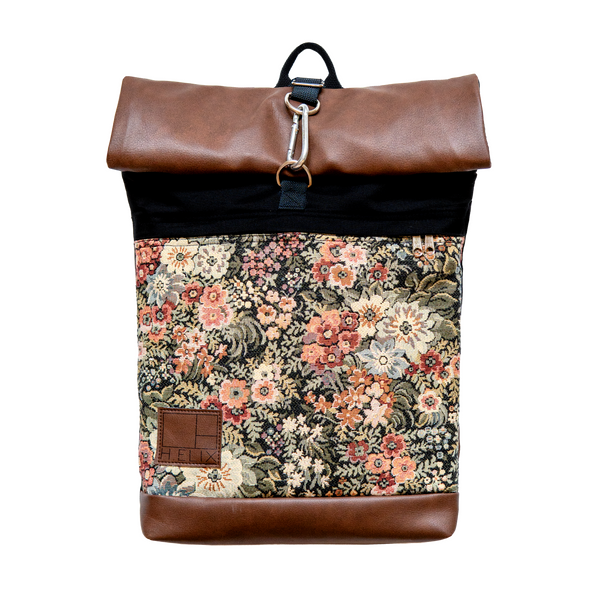 Sale
H.ELIX Nr.14
41.900 Ftfrom 33.600 Ft -
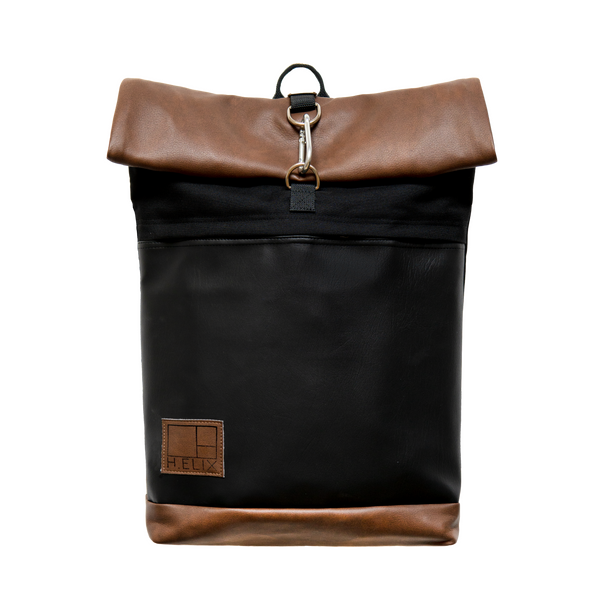 Sale
H.ELIX Nr.31
36.900 Ftfrom 29.500 Ft -
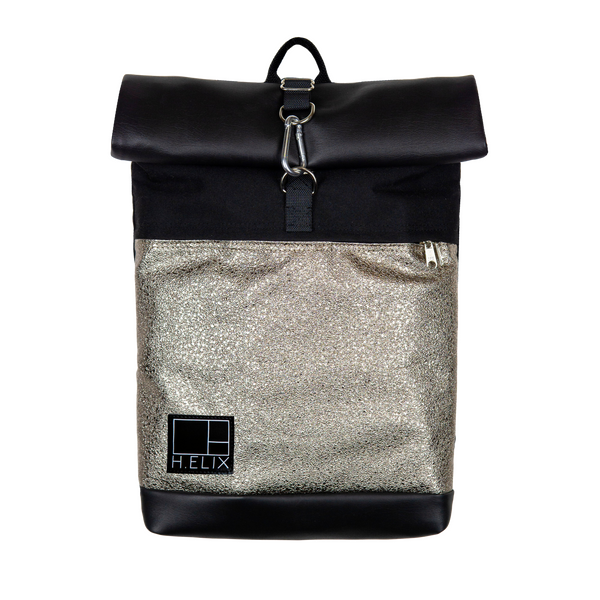 Sale
H.ELIX Nr.51
36.900 Ftfrom 29.500 Ft -
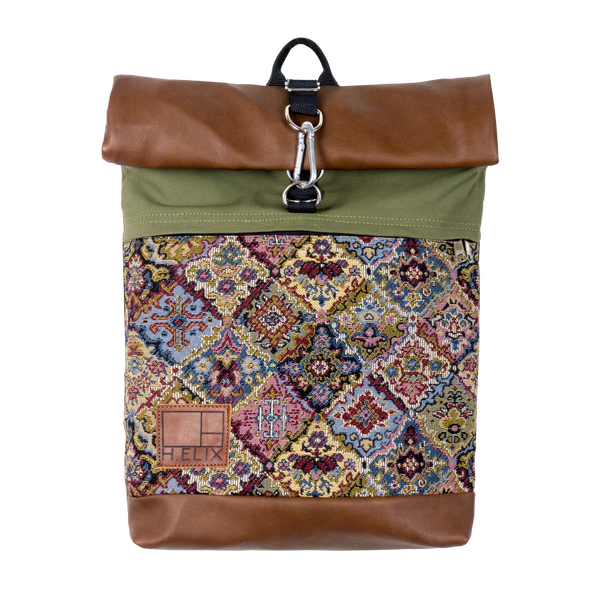 Sale
H.ELIX Nr.01
41.900 Ftfrom 33.600 Ft -
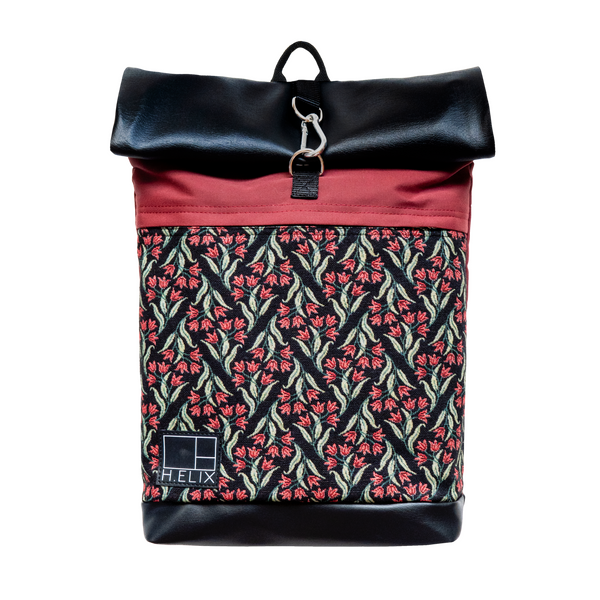 Sale
H.ELIX Nr.55
36.900 Ftfrom 29.500 Ft


Journal
Keep reading
-

Guides
Advent in Budapest's City Centre 2026: A Walk Through the Christmas Markets, With a Stop at Ours
When do the Christmas markets in central Budapest open and close, and which way should you walk between them? A route from the Párisi Udvar to the light...
-

Guides
Unique Christmas Gift: A Handmade Hungarian Rolltop City Bag to Carry on Your Journey for Years
Looking for a unique Christmas gift? Handmade Hungarian rolltop city bags with a lifetime warranty: gift ideas by personality, a size guide and our gift card.
-

Guides
Cabin-Size Rolltop Backpack for Wizz Air and Ryanair: What Fits for Free in 2027
Wizz Air and Ryanair only let you take a 40 × 30 × 20 cm bag for free. Here's what fits, which H.ELIX size to choose, and why...