



William Morris: The Craftsman-Artist Who Still Inspires Us
Who William Morris was, what he left us, and why two of our backpacks are based on his designs.

In this article
There are a few people without whose work H.ELIX wouldn't be the same. William Morris is one of them. Nearly 150 years ago he designed patterns that still appear on wallpaper, curtains and book covers today, and on two of our backpacks. This article is about him: who he was, what he made, and why he inspires us so much.
In short
- Who he was: English designer, writer and thinker (1834–1896), a leading figure of the Arts and Crafts movement.
- What he left us: a long line of wallpaper and textile patterns, including Strawberry Thief and Acanthus.
- At H.ELIX: the patterns on the Nr.95 and Nr.97 are based on his designs.
- Why he matters to us: he believed an everyday object can be useful and beautiful at the same time.
Who was William Morris?
William Morris was born in England in 1834, and he was much more than a pattern designer. He wrote poetry and novels, translated, founded a printing press, and championed craftsmanship and good work all his life. During the Industrial Revolution, when factories were churning out cheap, poorly made goods, he argued that well-made, beautiful things shouldn't be a luxury but something for everyone.
In 1861 he set up a firm with friends that later became known as Morris & Co. They made furniture, stained glass, wallpaper, woven and printed textiles, often using old craft techniques that Morris learned himself and brought back to life.
"Have nothing in your houses that you do not know to be useful, or believe to be beautiful."
William Morris, 1880
It's probably his best-known line, and it's exactly what we try to do: make a bag that works for you every day and is a pleasure to look at.
Patterns that are still alive
Morris's patterns start from nature: leaves, tendrils, flowers, birds. Yet they're not simple copies. They're carefully composed repeating systems in which every element has its place and the pattern can continue across any surface. That's what makes them feel calm and rich at the same time.

Strawberry Thief, 1883
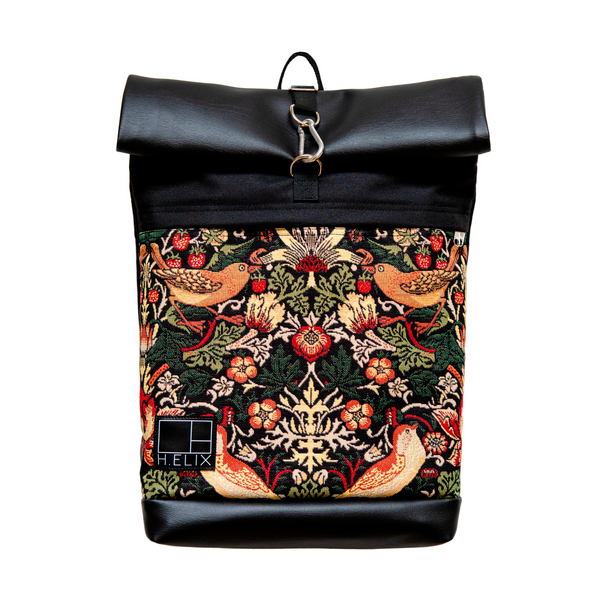
Perhaps the most famous Morris pattern. The story goes that thrushes kept stealing strawberries from the garden of his country house, and Morris turned it into a design. Behind the symmetrical order of birds, strawberries and flowers lies serious work: the fabric was block-printed using an indigo discharge method, which was slow and complex but gave deep, lasting colour.
Acanthus, 1875
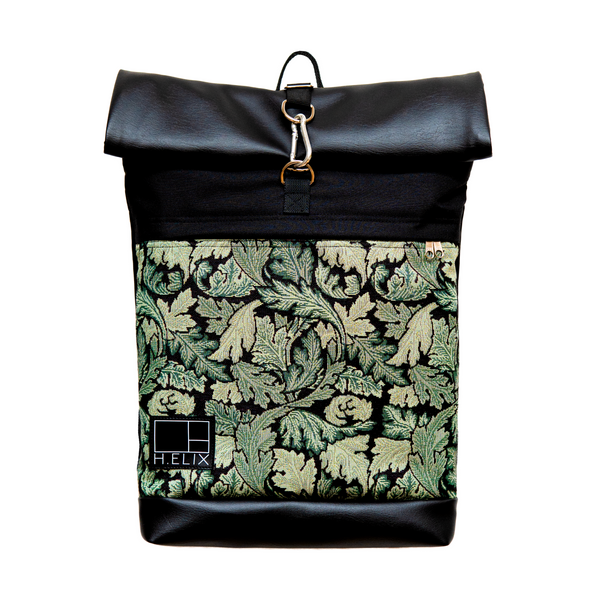
The large, curling acanthus leaves were designed as a wallpaper and became one of Morris's most complex patterns. Dark yet alive, lush yet ordered. The pattern on our Nr.97 carries the same mood.

Two of our bags, based on Morris's designs

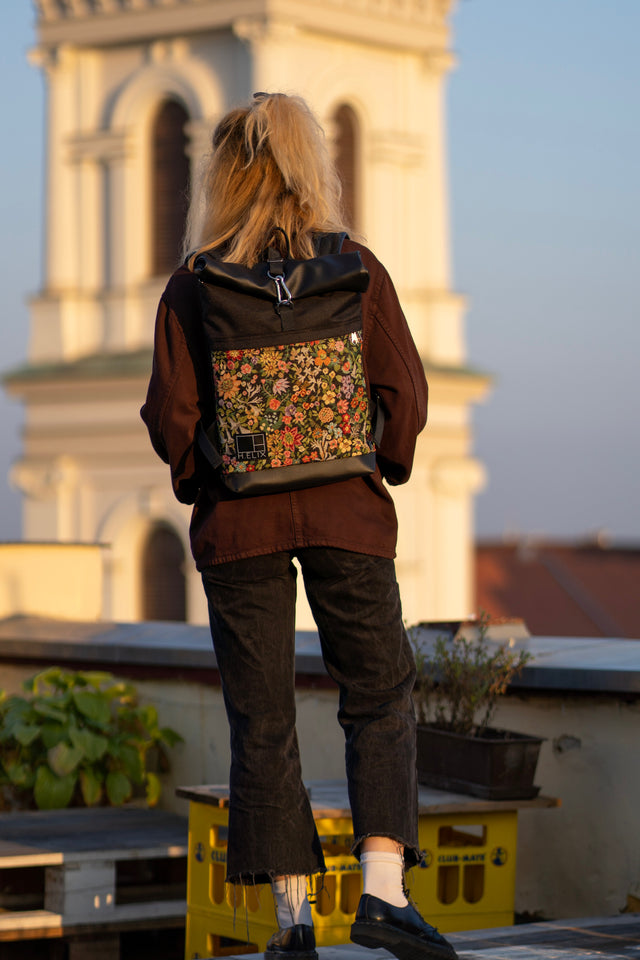
- H.ELIX Nr.95: a modern reproduction of Strawberry Thief, framed in black. Birds, strawberries and flowers on a dark background: one of the most detailed pieces in the collection, a true connoisseur's choice.
- H.ELIX Nr.97: large green acanthus leaves on black, with a black flap and base. Dark, botanical and understated: the patterned piece for people who would otherwise wear solid colours.

It's an interesting pairing: a 19th-century pattern on a rolltop backpack made from waterproof technical fabrics. We think Morris would like it. He didn't want to go back to the past either. He wanted beautiful things to be part of everyday life.
Morris, Art Nouveau and our showroom
Morris's influence reached far beyond England. The ideas of Arts and Crafts also inspired the Art Nouveau of the turn of the century, in Hungary for example the artists of the Gödöllő colony. The same principles: respect for craft, forms taken from nature, and the idea that an everyday object can be a work of art.
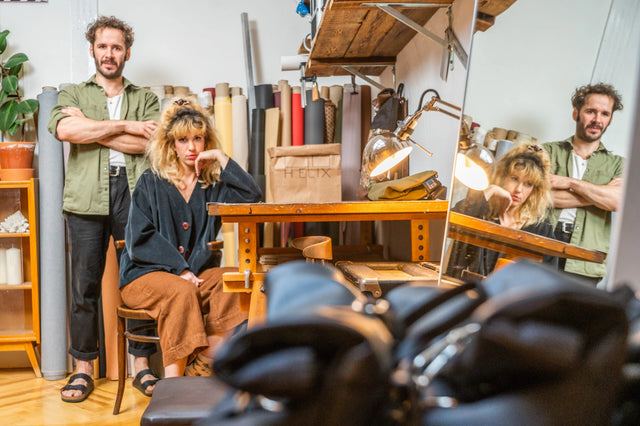
That's why it means a lot to us that our showroom is in an Art Nouveau building, the former Török Bankház on Szervita tér in Budapest. It was built in 1905–1906 to designs by Henrik Böhm and Ármin Hegedűs, and its facade is crowned by Miksa Róth's huge glass mosaic, the Apotheosis of Hungaria. It's one of the most beautiful Art Nouveau facades in Budapest.

Frequently asked questions
Are the bags made from original Morris fabric?
The patterns are modern reproductions based on William Morris's designs. So the pattern is Morris's, but the fabric is made today and stands up to everyday use.
Where can I see them in person?
In our showroom at Szervita tér 3, in the former Török Bankház.
Useful and beautiful
For Morris, an object had to work well and feel good to use. That's what we look for in every bag. Take a look at the Nr.95 and the Nr.97, or browse all our rolltop backpacks.
Our backpacks
Find your rolltop
View all →-
 Sale
H.ELIX Nr.94
€122,99from €98,49 -
 Sale
H.ELIX Nr.95
€122,99from €98,49 -
 Sale
H.ELIX Nr.90
€122,99from €98,49 -
 Sale
H.ELIX Black
€122,99from €98,49 -
 Sale
H.ELIX Nr.97
€122,99from €98,49 -
 Sale
H.ELIX Nr.84
€139,99from €111,99 -
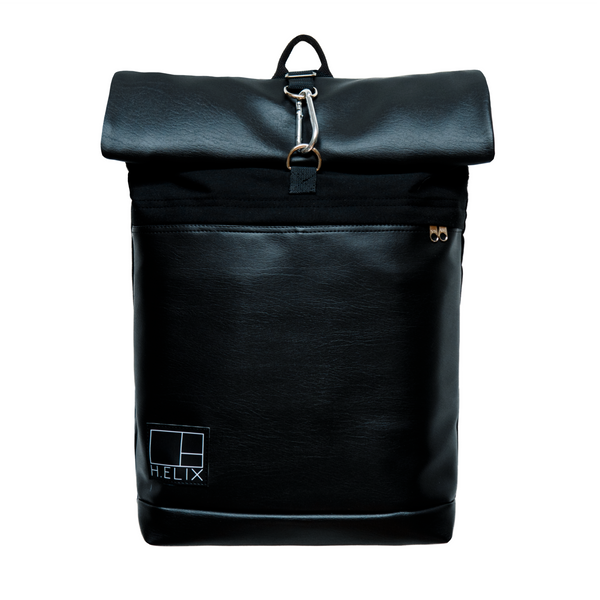 Sale
H.ELIX Nr.16
€122,99from €98,49 -
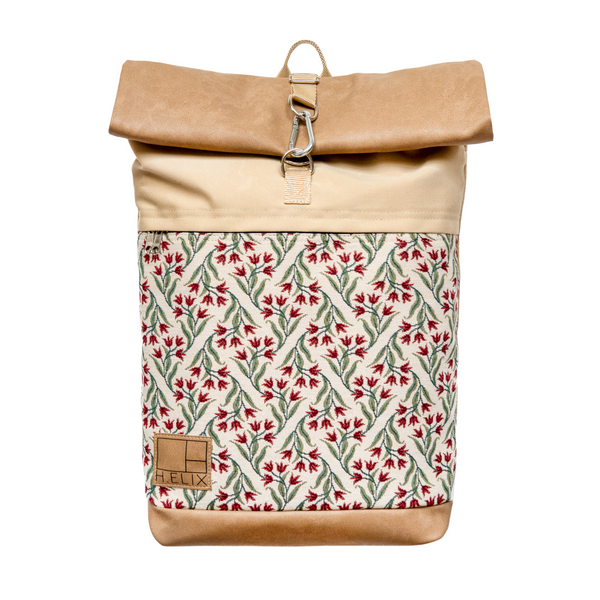 Sale
H.ELIX Nr.92
€122,99from €98,49 -
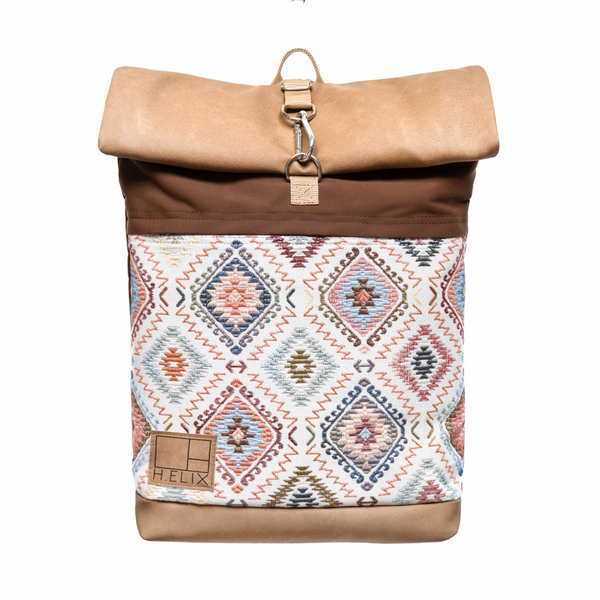 Sale
H.ELIX Nr.58
€122,99from €98,49 -
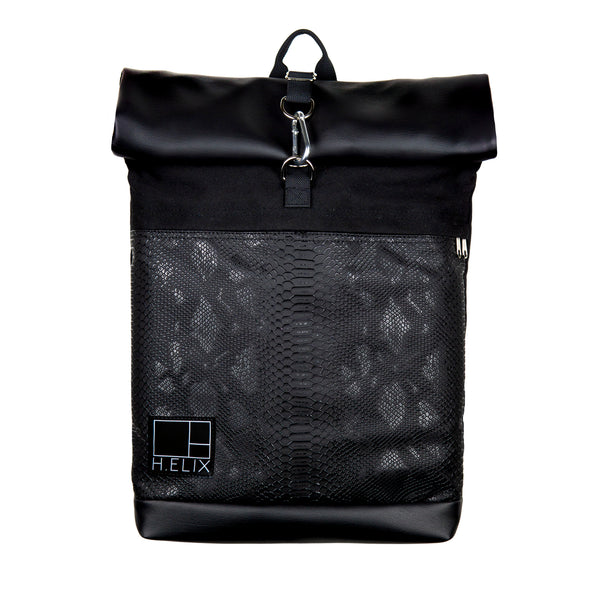 Sale
H.ELIX Nr.75
€122,99from €98,49 -
 Sale
H.ELIX Nr.83
€122,99from €98,49 -
 Sale
H.ELIX Nr.14
€139,99from €111,99 -
 Sale
H.ELIX Nr.31
€122,99from €98,49 -
 Sale
H.ELIX Nr.51
€122,99from €98,49 -
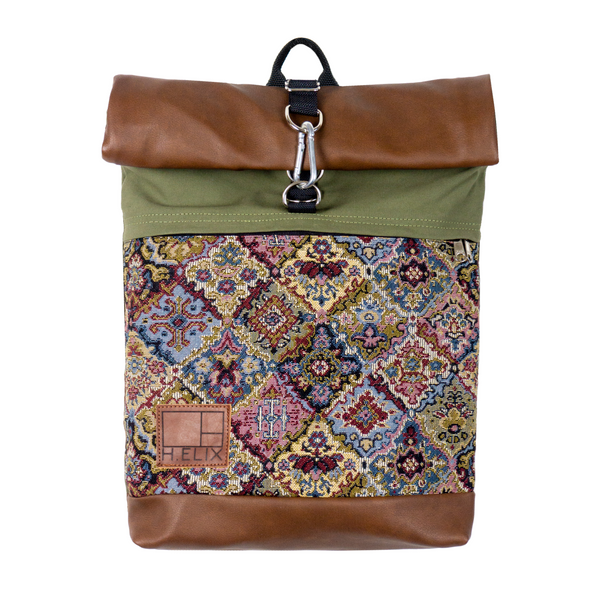 Sale
H.ELIX Nr.01
€139,99from €111,99 -
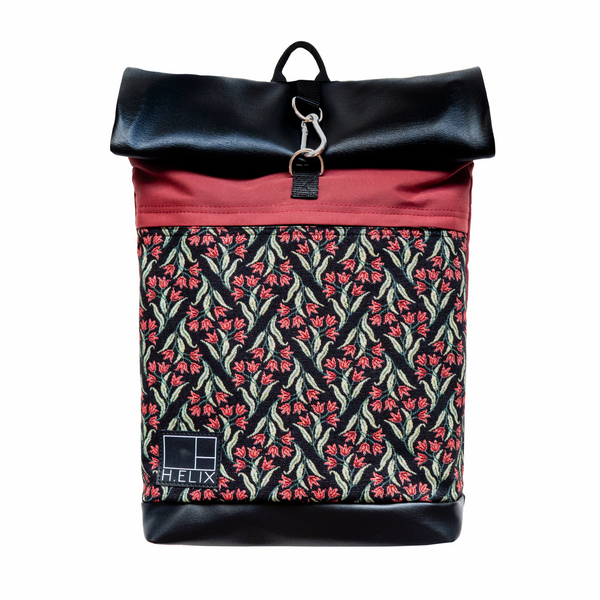 Sale
H.ELIX Nr.55
€122,99from €98,49
Journal
Keep reading
-

Guides
Unique Christmas Gift: A Handmade Hungarian Rolltop City Bag to Carry on Your Journey for Years
Looking for a unique Christmas gift? Handmade Hungarian rolltop city bags with a lifetime warranty: gift ideas by personality, a size guide and our gift card.
-

Guides
Cabin-Size Rolltop Backpack for Wizz Air and Ryanair: What Fits for Free in 2027
Wizz Air and Ryanair only let you take a 40 × 30 × 20 cm bag for free. Here's what fits, which H.ELIX size to choose, and why...
-

Guides
Our Materials, Up Close: What a Backpack Built for Years Is Made Of
What our backpacks are made of, and why: marine-grade fabrics, upholstery made to last, stainless steel hardware, and the numbers behind them.